
A Provençal village, ruins of the former popes' palace, an exceptional vineyard and the banks of the Rhône
A Day in Châteauneuf-du-Pape, Starting from Château de Montcaud
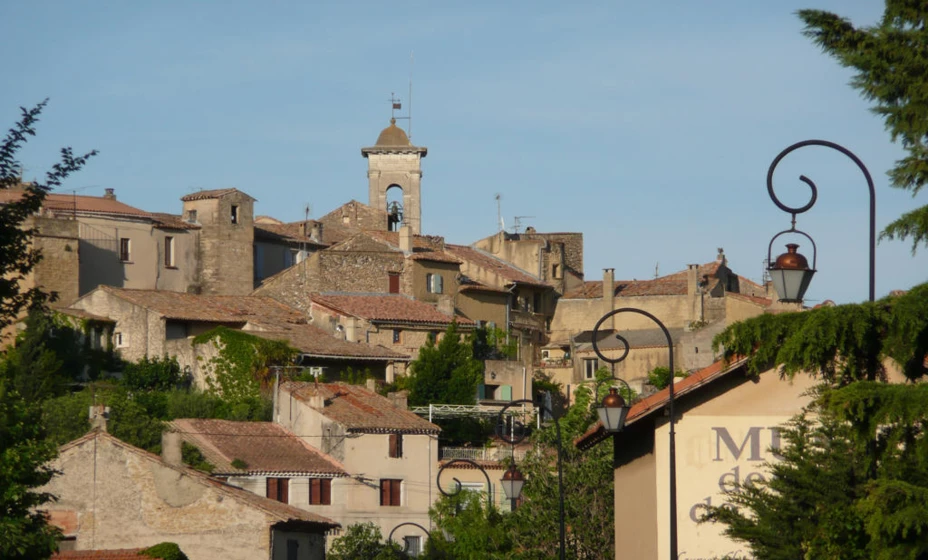
Here’s our itinerary for a day spent amidst golden lanes, tastings and trails.
A prestigious label on a wine list, and nothing more? We certainly don’t think so! Located about a forty-minute driven from the Château, Châteauneuf-du-Pape is, above all else, an intimate village, a historic hilltop site and home to one of France’s most renowned wine-producing regions, all packed into just a few kilometres. It offers the perfect setting for a full day out, whether on your way there or back to our little haven of peace.
In the morning, explore the village’s narrow streets
Let’s start at the beginning: park the car at the Baron Le Roy car park - free and just a stone’s throw away from the village’s centre - before setting off on foot without a specific route. Châteauneuf-du-Pape is best discovered by strolling through its steep alleyways, covered passages and that golden stone that catches the light at every hour of the day. Mind the Rue Rompe-cul, though! It’s Provençal name, however unrefined, clearly signals what to expect (especially regarding the incline), for anyone who ventures there!
In the main square, the Grande Fontaine has stood watch since 1635, surrounded by four nymphs who guard history’s secrets. All around, the facades tell the story of the centuries of alterations, featuring everything from corner turrets to shutters that close off inner courtyards. There’s nothing quite like a leisurely, aimless stroll to sense that this village still truly lives by its vineyards.
The remains of the Popes' palace
It is no coincidence that the village is called "Châteauneuf-du-Pape". In the 14th century, Pope John XXII had a summer residence built here, at a time when the papal court, based in Avignon, was seeking a breath of fresh, cool air for the hot season. Hailing from Cahors, he also brought along winemakers from his native region, whose expertise gave a real boost to the fledgling vineyard. Only ruins remain today, but what ruins they are: perched at the village’s highest point, they still command respect.
The climb to the château’s esplanade requires no great effort, and the reward is well worth the ascent. From the top, the panorama takes in the Rhône Valley, the Dentelles de Montmirail, Mont Ventoux and, on a clear day, the foothills of the Alps. It is a 360-degree view that, in itself, makes the early-morning detour worthwhile.
At noon, get a feel for the village
If your visit falls on a Friday, don’t miss the weekly morning market on Place de la Renaissance - a chance to breathe in the scents of Provence before sitting down to a meal. On other days, the same square offers plenty of shaded terraces just steps from the ruins, perfect for a lunch break that moves at the village's own pace.
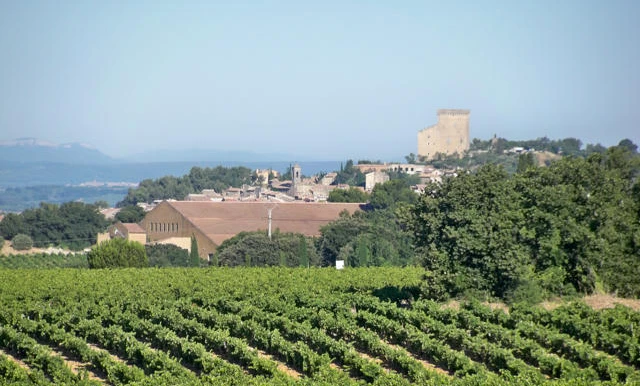
Immerse yourself in the vineyards in the afternoon
The afternoon belongs to the vine. And here, the vine has a story to tell, one literally etched onto every bottle: since the 14th century, the papal tiara and crossed keys have adorned the appellation’s coat of arms, perpetuating the link to John XXII and his court, whose influence earned those wines the nickname “Wine of the Pope.”
Rounded pebbles: the secret of the terroir
It’s impossible to walk through the vineyards without noticing the round, almost white pebbles covering some of the plots. Shaped by the Rhône over millennia and left behind by the ancient Alpine glaciers, these stones store the sun’s heat throughout the day and radiate it back to the vines at night - a simple yet crucial phenomenon for the ripeness and power of the grapes grown there.
Thirteen grape varieties and a pioneering appellation
Another interesting fact: Châteauneuf-du-Pape is one of the few French appellations to authorise thirteen different grape varieties in its blends: a figure that has remained iconic, even though the official specifications now list eighteen. In fact, the very first regulations, drafted by local winemakers as early as 1923, prior to the 1936 AOC designation, served as the model for the entire French appellation system. Today, the appellation covers approximately 3,200 hectares, driven by nearly 320 winemakers operating across some 220 wineries.
Museum and tasting room: a visit to Maison Brotte
To extend the experience, the Maison Brotte Wine Museum, located in the heart of the village, is well worth a visit. Founded in 1972, it showcases traditional winemaking and viticulture through antique tools - some dating back to the 14th century - before leading into the estate's own tasting cellar. The tour is self-guided via a free audio guide, allowing you to explore at your own pace with a glass in hand.
All around, numerous other wine cellars open their doors along the small roads crisscrossing the vineyards. Our concierge is at your disposal to help you plan your own wine route and suggest estates to visit, depending on your preferences and the time you have left before heading back to Sabran.
Unwinding by the Rhône as the day ends
Before hitting the road again, those who enjoy ending the day at a more leisurely pace should make one last stop: the Islon Saint-Luc. Located just outside the village, nestled between the vineyards and the Rhône, this natural area is a designated Natura 2000 site. Its trails, open to both walkers and joggers, run alongside the river and intersect with the ViaRhôna, the cycle route connecting Lake Geneva to the Mediterranean.
You can also catch a glimpse of the remains of the Château de l'Hers, a former toll post that serves as a reminder of how Châteauneuf-du-Pape long controlled passage along the Rhône, long before it became a name on wine labels. It’s a peaceful way to round off the day, amidst nature and history.
Return to Montcaud as evening falls
After a drive of just under an hour, the Château’s gates close behind you, and the *garrigue* scrubland reclaims the landscape from the Rhône vineyards. All that’s left to do is sit down beneath the chestnut trees, perhaps with a glass of Châteauneuf-du-Pape in hand, and reflect on a day well spent amidst papal ruins, sweeping vistas and smooth river stones.
So, are you ready to swap the Sabran region for the Rhône vineyards for a day?