
From Terroir to Table
Meet the producers
A few years ago, a guest asked us a simple question: “Where does this honey come from?” The answer was three words: “From our hives.” His perspective changed. It wasn’t just honey anymore; it was a story. Since then, we’ve understood that every product on our tables deserves the same attention and transparency.
At Château de Montcaud, the culinary journey begins long before the stove is lit. It begins on country roads, in neighbouring farms, amidst olive groves and lavender fields. Because for our chef Matthieu Hervé, sourcing is not a constraint; it’s a conviction.
“I’m not looking for suppliers, I’m looking for partners,” he explains. “People who work with the same high standards as we do. When I know the producer, when I’ve seen their livestock, their trees, their methods, I cook differently. With more respect.”
The treasures of the Gard, within reach
Our region is brimming with discreet know-how, passed down from generation to generation. Less than an hour from the Château, we find most of the ingredients that feature on our plates.
Mont Bouquet Goat Cheese
This soft goat cheese, recognisable by its thin, wrinkled rind, is carefully crafted in the hills of the Gard. We work with goat cheese from Mont Bouquet, in Lussan, produced by Johanna Lancement.
Her goats are raised outdoors and graze on what they find in the surrounding vegetation, which is rich in thyme, rosemary and wild herbs. Johanna then carefully ages her cheeses to reveal all the finesse and unique character of their environment.
"Cheese is the living expression of the Cévennes landscape," says Matthieu. "The taste varies depending on the season and what the goats have grazed on. That's what makes it unique."
Truffles from Le Garn
Every winter, the Uzès truffle market attracts connoisseurs from all over the region. The black truffle, Tuber melanosporum, reigns supreme there from December to March. We source ours from Yolaine Drouilly of La Maison de Garniac, located just above Barjac in the village of Le Garn, whose truffle oaks are planted within the same region.
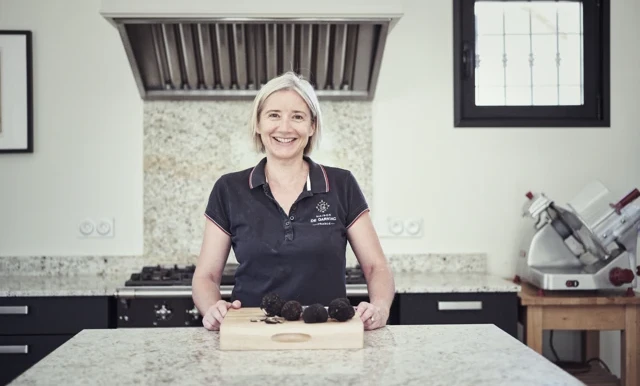
Truffles must be respected. Not drowned.
At Château de Montcaud, truffles aren't hidden under layers of cream. Chef Matthieu prefers to showcase them simply: generous shavings on a risotto, pairing them with foie gras to enhance their flavour, delicately incorporating them into de Montcaud honey... and many other delightful discoveries.
Olive Oil from the valley
Olive trees have shaped our landscape since ancient times. We collaborate with two exceptional producers who perpetuate this thousand-year-old heritage.
Domaine La Réméjeanne in Sabran supplies us with two remarkable oils: a fruity green and a mature variety, both used in cooking and for tasting. Each reveals the subtleties of the Gard region and delicately complements our dishes.
At our gourmet restaurant Le Cèdre de Montcaud, we serve the award-winning olive oil from Domaine de la Magnanerie in Orgnac l'Aven as a table oil. Here, the olives are pressed on-site, respecting an ancestral know-how passed down from generation to generation.
De Montcaud honey: our own exception
Some products don't need to travel far. Our honey travels exactly zero kilometers: it comes from our own hives, installed in the Château's grounds in 2019.
Our 17 bee colonies forage on the estate's flowers - linden trees, acacias, wild lavender - and produce 100% natural honey with aromas that change with the seasons. Some bountiful years yield up to 300 kilos; others, more modest, barely 50. Nature decides.
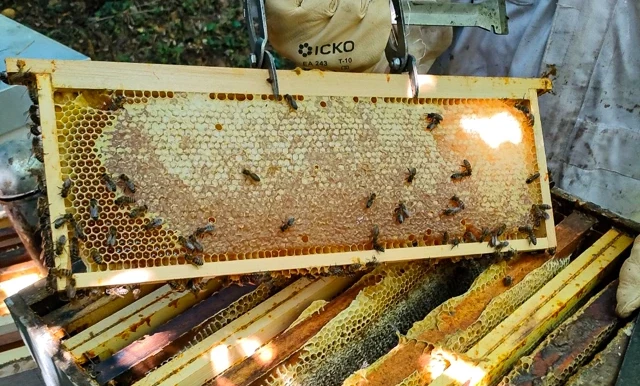
This honey is the taste of our land. You don't just eat honey, you taste a place.
Sourcing Locally: A Choice, Not a Trend
Like many others, we could have simply ordered order our products from wholesalers. It’s easier, more predictable and often cheaper. But, we’ve made a different choice.
Working with short supply chains means, first and foremost, accepting the unexpected. A farmer who doesn't have enough poultry this week. A market gardener whose tomatoes ripened earlier than expected. A disappointing truffle harvest. But it also guarantees absolute freshness, complete traceability and a human connection that you won't find anywhere else.
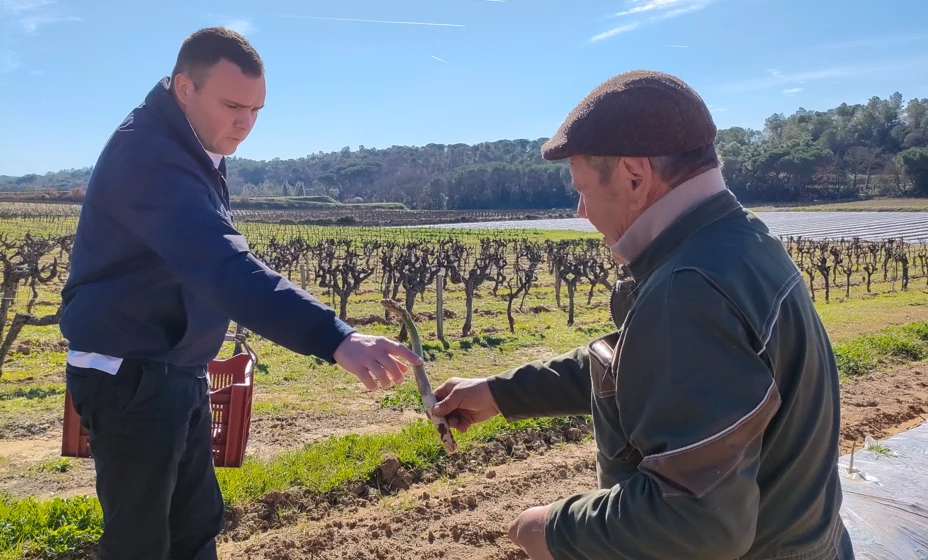
Mr. Chenivesse, in the hamlet of Mégiers in Sabran, delivers his green asparagus to us the very morning it's picked. Franck and Justin Vialle, in Saint Laurent de Carnols, raise their ducks. Olivier Klein from Domaine de la Réméjeanne, whose vineyards almost border our estate, supplies us with wines.
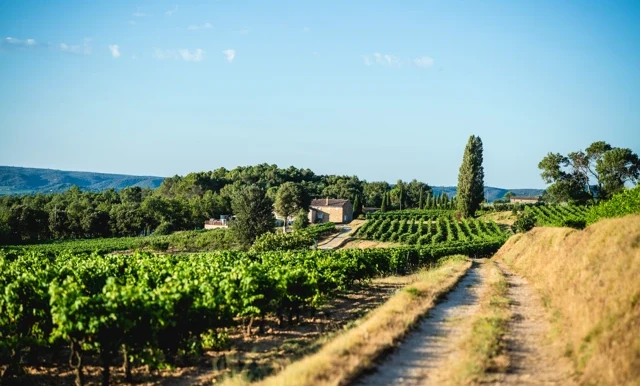
Our suppliers are much more than partners. It's this closeness that gives meaning to our cuisine.
Seasonality as a Compass
At Château de Montcaud, the menu changes. Often. Sometimes from one week to the next. Because we refuse to offer strawberries in January or asparagus in August.
Spring brings the first green vegetables, wild asparagus and morels. Summer bursts with tomatoes, courgettes, aubergines and sun-ripened fruits. Autumn brings back mushrooms, squash and the first truffles. Winter is the time for comforting dishes, game and citrus fruits.
"The menu reflects what grows around us," explains Matthieu. "When a guest returns six months later, they won't find the same dishes. They'll discover a different season, a different facet of the local produce."
This approach requires flexibility, creativity and complete trust in our producers. But it guarantees one thing: each plate tells the story of a specific moment of the year, a state of the territory at that precise moment.
From Farm to Fork
So, where does the food that you eat at Château de Montcaud come from?
The goat's cheese on your plate comes from herds grazing 30 kilometres from here. The oil drizzled over your ceviche was pressed in Sabran a few weeks ago. The vegetables on your plate were picked this morning. And the honey at your breakfast? It was harvested in the park you can see from the terrace.
This is our way of cooking. Our way of respecting this land that welcomes us. Our way of offering you an authentic experience with every meal.
When a customer asks me where a product comes from, I like to be able to answer with a first name. That, for me, is true gastronomy.
Our Partner Producers:
- Goat's Cheese: Les fromages de Mont Bouquet, Lussan
- Truffles: Maison de Garniac, Le Garn
- Olive Oil: Domaine la Réméjeanne, Sabran & Domaine de la Magnanerie, Orgnac l’Aven
- Asparagus: Chenivesse Family, Sabran
- Wines: Domaine la Réméjeanne, Sabran
- Honey: beehives at Château de Montcaud
This list changes with the seasons and new encounters.